.png)


Medical conditions that specifically impact women are frequently disregarded, either by men or by other women who do not experience those same ailments. One of these conditions is PCOS, a complex hormonal condition that changes the lives of those affected physically, mentally, and socially.
Due to PCOS making pregnancy much more difficult, it affects women with the condition socially in the Philippines— a very “family-oriented” country— a lot more than anywhere else. With that being said, an abundance of stigmas and myths have risen around this condition; which to some may sound plausible, but sometimes they aren’t. As a guy that has just found out about PCOS, and even learned more about it through some of my friends who also have the condition, made me look more into these myths and stigmas. Through a survey we conducted, I learned about the many myths that the general public knows about.
Let's debunk some of them.

Women with PCOS cannot give birth.
While PCOS does make it harder for women to get pregnant that does not mean that it is impossible. There have been many success stories that prove this myth wrong and even a research paper that states.
“Majority (88%) of the women had primary infertility, and 12% had secondary infertility and were primigravida. Almost 62% of women conceived spontaneously, while 38% wome conceived after treatment”
This means that with proper treatment those with PCOS will still be able to give birth and start a family. Therefore, PCOS does not prevent those with the condition from giving birth but with enough perseverance and the proper support you will be able to create a success story of your own.
PCOS only affects overweight women and has no effect on weight.
Even though PCOS primarily affects overweight women, it is still a condition that affects them impartially. The reason as to why PCOS is usually attributed to overweight women is due to an aspect women with the condition cannot control, In a research paper it states that.
“Many women who have PCOS also have insulin resistance, which happens when the body has difficulty pulling glucose from the bloodstream and converting it to energy”
.png)
Due to this women with PCOS gain a lot more weight than normal. However, with some good lifestyle changes those affected by PCOS will see that they are still able to lose weight even if it's just little by little.

PCOS itself is a rare condition.
In a research study by “J Womens Health (Larchmt). 2011 Mar'' it states that PCOS has an “estimated prevalence of nearly 7%–10%” meaning that PCOS can affect up to 1/10th of all women on earth. Therefore, PCOS is a lot more prevalent than many people think it is. Having found out myself that some of my own friends had PCOS shows that the condition isn't rare, it is just unseen.
PCOS is a one-size-fits-all condition.
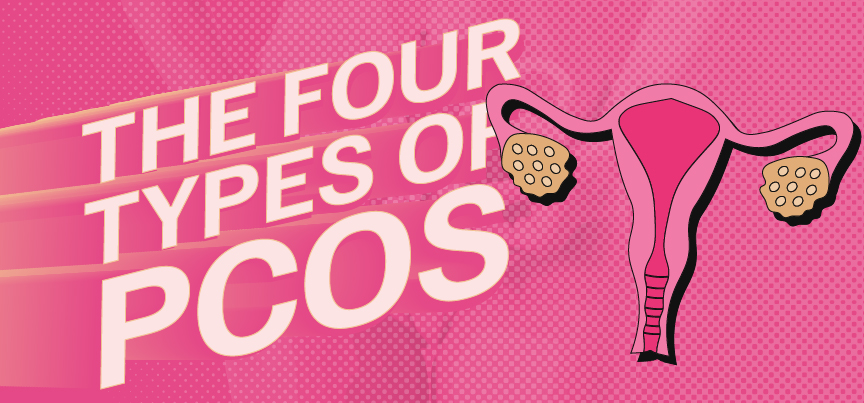
PCOS like any other condition affects different people in many different ways. There are also different types of PCOS that affect people differently and are caused by different sources.
The main four are Insulin-resistant PCOS, Inflammatory PCOS, Post-Pill PCOS, and Adrenal PCOS. This means that a solution that may have worked for another person may not work for you and vice versa. The best way to find out what is good for you is to go to a doctor and try out different methods or diets that will work for you. Even though you have a condition that limits what you can eat, do not force restrictions on yourself, as in the end, it may affect you negatively.

.png)
PCOS is their own fault.
Many people believe that PCOS develops due to something those affected by it have done, while there may be exceptions; people who do develop PCOS are usually not in control if they get the condition. An example of this is that PCOS is genetic; if you have someone in your family that has PCOS, you are likely to develop PCOS yourself.
With how unpredictable and harmful PCOS is, the best method to counter the condition is by prevention or mitigation. Then why is it that I have only heard of PCOS now?
In the same survey, to find out the myths, we also asked why isn’t PCOS talked about more , and if the reason as to why PCOS is not talked about more is due to the discrimination it might cause.
And what we got is YES.
Discrimination is one of the main factors, and due to the Philippines' catholic culture, it makes it more difficult for women to come out about a condition such as PCOS. Just the fact that it is more difficult to give birth is a cause for question. An example given is “Ilang taon na silang kasal wala pa rin silang anak?” “Baog siguro siya”.
Another example given from the survey:
“As someone who has a friend with PCOS, I've always seen her being shamed by people who should be her pillars of support; she cannot control everything about her body, but they feel like she can control it. Every time she tries to do something about it, they shame her more, to the point that she just went resilient.”
Many of the older generation, or even men or women who do not know about PCOS, only judge based on what they have heard. Paired with the PCOS being an unseen condition, not knowing until you ask the person themselves, is a cause for ignorance.
As a person who has just learned about PCOS just recently, I find it important to learn about such things that can and will affect the people you know. By giving people with any condition—not just PCOS— the support they need, they will be able to get through any dark times that you are only able to imagine.
Want to read more about this topic? Download the magazine here.
Comments
insightful
09-10-23 10:09:27
Such a good read from a male perspective as well!
22-11-23 04:46:07
sobrang totoo to! nakakarelate talaga ako sa prejudice from people when it comes to my body. hindi lang pala ako nag-iisa. :(
22-11-23 04:47:20
Still Curious?



Add a comment